
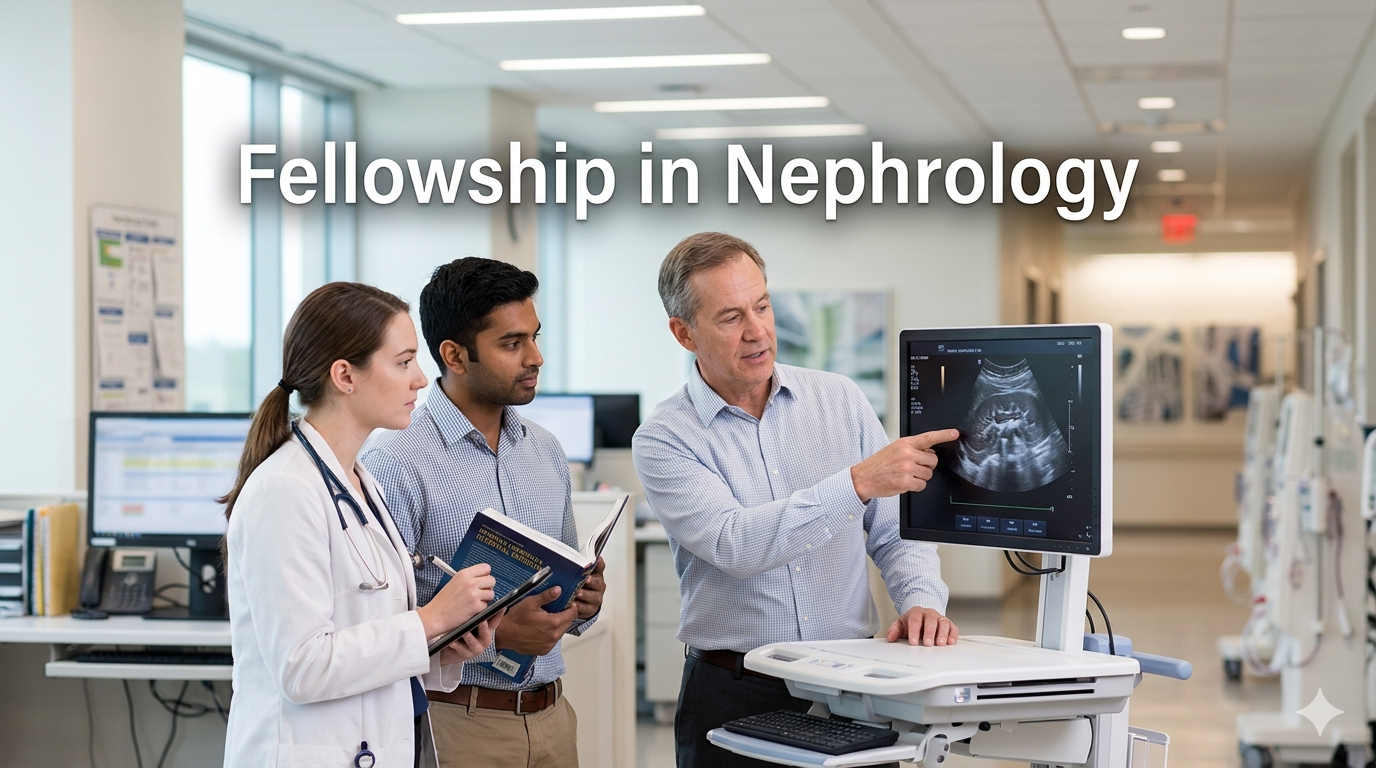
The healthcare field is changing quickly and the need for nephrology experts equipped for addressing many, often complicated, kidney problems as well as advance care of these patients continues to grow. Due to the growing number of chronic kidney diseases and renal disorders worldwide, nephrologists with specific education are in high demand. A Fellowship in Nephrology Enables Physicians to Acquire Specialized Clinical Knowledge and Expand Their Career Opportunities in a Not Only Rewarding but Also Necessary Specialty.
Even many doctors and practitioners are looking to specialise themselves further by taking up professional Medical Courses For Healthcare Professionals which allows them to sharpen their skills while updating the knowledge regarding contemporary treatment paradigms. When guided correctly and educated, healthcare professionals can have endless opportunities to learn, grow professionally, and realise their career ambitions in the long term.
What Is a Fellowship in Nephrology?
A specialized Fellowship in Nephrology is a training period for physicians focused on furthering the care and management of individuals with kidney disorder or disease. These fellowships incorporate a combination of education and hands-on experience in renal medicine, dialysis procedures, transplantation, and patient care.
The program generally focuses on:
- Kidney disease diagnosis and treatment
- Dialysis management
- Renal transplantation
- Clinical decision-making
- Patient counseling and long-term care
- Research and evidence-based medicine
By undergoing structured training, they acquire specialized knowledge and skills in order to provide high-quality healthcare services.
Why is it even import in the todays healthcare world?
Diabetes, hypertension and chronic kidney disease in patients are more common over the years. This led to a high demand for skilled nephrology specialists who could care for complicated renal diseases.
Modern healthcare systems need like trained professionals who have:
- Advanced clinical expertise
- Knowledge of renal disorders
- Diagnostic and analytical skills
- Patient management capabilities
- Evidence-based treatment approaches
- Ethical and professional standards
As the healthcare landscape continues to evolve, knowing the importance of pursuing a Fellowship in Nephrology helps medical professionals acclimatize to these changes and play an active role in positively influencing patient outcomes.
Important Skills and Knowledge You Will Get
Specialized nephrology training involves an integration of theoretical knowledge and comprehensive clinical experience. Participants demonstrate competencies that improve their roles in delivering complex renal services.
Clinical Skills
Some important skills learned include:
- Diagnosis of kidney diseases
- Dialysis procedures and management
- Interpretation of laboratory findings
- Renal transplantation care
- Interventions for hypertension and electrolyte disorders
- Patient counseling and monitoring
- Emergency renal care
Professional Skills
Healthcare professionals also develop:
- Critical thinking abilities
- Clinical decision-making skills
- Communication with patients and families
- Team collaboration
- Research capabilities
- Leadership and ethical practices
Although traditional training is sanctioned by professional bodies, many participants further consolidate their competence with bespoke Medical Courses For Healthcare Professionals primarily intended for nephrology but also urology focused medical students.
Future Scope of Fellowship in Nephrology and Career Opportunities
The most important advantages in multistage seminary examination is an intensive career options available in both source and personal career settings.
Career Opportunities
Graduates may work as:
- Nephrologists
- Renal consultants
- Dialysis specialists
- Clinical researchers
- Medical educators
- Transplant coordinators
- Hospital specialists
- Healthcare consultants
Industry Applications
Professionals can find opportunities in:
- Multi-specialty hospitals
- Kidney care centers
- Dialysis units
- Academic institutions
- Research organizations
- Transplant facilities
- Healthcare management organizations
As they gain experience and further certification, specialists may also set up their own practices or join research studies.
Learn About the Advantages of Pursuing a Fellowship in Nephrology
The nephrology fellowship is about way beyond technical knowledge. This prepares healthcare workers for essential specialized skills that are considered prestigious within the medical community.
Learning Benefits
- Advanced clinical exposure
- Hands-on patient management experience
- Evidence-based treatment understanding
- Improved diagnostic abilities
- Research opportunities
- Continuous professional development
Professional Advantages
- High demand for nephrology specialists
- Greater career advancement opportunities
- Increased earning potential
- Opportunities for academic roles
- International career possibilities
- Enhanced professional credibility
Even more doctors opt for practical Medical Courses For Healthcare Professionals to enhance their knowledge in better understanding and integration of multidisciplinary healthcare practices to offer improved patient care as whole.
Professional Comparison Table
The following table offers a concise overview of the Fellowship in Nephrology course:
| Feature | Details |
|---|---|
| Program/Course | Fellowship in Nephrology |
| Duration | 1 Year to 2 Years |
| Eligibility | MBBS with Relevant Clinical Experience |
| Learning Mode | Clinical Training and Academic Sessions |
| Key Skills | Dialysis Management, Renal Care, Transplantation |
| Career Opportunities | Hospitals, Kidney Centers, Research Institutions |
| Certification/Support | Certification Guidance and Career Assistance |
Selecting the Right Course or Training
Choosing the right institute is a crucial step towards a successful medical career. A good fellowship, on the other hand, has a mix of practical experience, mentorship from specialists and updated medical knowledge.
Curriculum Quality
Look for programs covering:
- Renal physiology
- Dialysis procedures
- Transplant medicine
- Hypertension management
- Clinical nephrology
- Research methodologies
Practical Learning
The on-the-ground clinical opportunities give participants real-world skills and confidence to make decisions better.
Faculty Expertise
Trainers and mentors draw on lessons from real-world clinical practice.
Certification Support
Certification guidance provided by institutions can help learners gain recognition, both professionally and career-wise.
Career-oriented Medical Courses For Healthcare Professionals are often chosen by many of the physicians, as they boast of being additional learning opportunities and promote continuous development.
Why to Opt For a Professional Training Institute?
Opting for a well-established trusted learning provider definitely amplifies your learning outcomes and career openings.
Expert Trainers
Participants benefit by learning from specialists with extensive experience for an up-to-date understanding of current treatment protocols and best practices.
Practical Learning Environment
Professional institutes provide:
- Clinical case discussions
- Hands-on exposure
- Simulation-based learning
- Patient-centered training
Industry-Oriented Curriculum
Modern programs focus on:
- Evidence-based medicine
- Advanced diagnostics
- Renal replacement therapies
- Transplant medicine
- Patient safety and ethics
Career Support
Leading institutes often provide:
- Mentorship programs
- Career counseling
- Networking opportunities
- Placement assistance
Certification Guidance
Formal institutions aid participants in preparing themselves for certifications that are crucial for obtaining credentials and career advancement.
Reliable Medical Courses For Healthcare Professionals are mostly intended for proper specialization and assist in long-lasting success, which many nurses require.
Industry Trends and Professional Growth
Nephrology is progressing with newer innovations, and therapeutic approaches. Those who keep up with improving their skillset have a higher chance of going ahead in their career.
Emerging Trends
- Artificial intelligence in diagnostics
- Personalized kidney care
- Tele-nephrology services
- Precision medicine
- Wearable dialysis technologies
- Digital health integration
Future Growth Opportunities
Healthcare professionals can pursue:
- Advanced nephrology specialization
- Academic and teaching roles
- Clinical research opportunities
- International practice opportunities
- Healthcare leadership positions
- Multidisciplinary collaborations
With the development of healthcare systems, specialists who undergo fellowship training in Nephrology are likely to be highly sought after by a variety of medical settings.
Conclusion
As the significance of specialized training in healthcare has increased, obtaining a Fellowship and specifically this Fellowship provides unparalleled long-term value to any medical professional looking to enhance their career or find deeper clinical skill development. This specialization not only covers advanced patient care but also creates a path into academic roles and research.
Nephrology training enhances both the knowledge and practical aspects as well as the professional credibility, especially when combined with professional Medical Courses For Healthcare Professionals. If you want to deepen your experience so that you can broaden the branch of career options available, perhaps one of these quality fellowships is a good first step in achieving those goals.
Frequently Asked Questions
1. Who is eligible for a Fellowship in Nephrology?
Many programs also expect candidates to have an MBBS degree and related clinical experience. These eligibility criteria may also vary based on the institution.
2. What career opportunities are available after completing a Fellowship in Nephrology?
Career Options: Graduates have the option of several career opportunities and can work as nephrologists, renal consultants, clinical researchers, dialysis specialists, educators, transplant coordinators.
3. Is certification important after completing nephrology training?
Yes. Certifications become an important factor in building professional recognition and a path towards employment within hospitals, academic institutions and other healthcare organizations.
4. What skills are learned during nephrology fellowship programs?
Participants learnt about modalities of kidney disease management like dialysis procedures, transplantation care, clinical research and patient counselling.
5. Can beginners pursue a Fellowship in Nephrology?
The fellowship programs are designed for medical professionals with the necessary educational background and clinical experience to gain advanced training needed to specialize in nephrology.